Booking deposits and payments · 9 min read
Collecting Booking Deposits Online: Methods, Fees and Tax Obligations
August 17, 2026 · Equipo Teser

You ask for a 50 euro deposit and the client asks, "How do I pay you?" If your answer is an account number and waiting for the proof of payment by hand, you've already lost time and control. Collecting payments remotely without a clear system costs you admin time and fees you often don't even look at. Let's get into the numbers and the real options.
Why collect the deposit remotely (and not only at the studio)
If you only collect a deposit when the client walks into the studio, you lose half the point of asking for one: filtering before you block a slot in your calendar. The deposit separates people with genuine intent from those comparing options at four studios at once. If they have to come in person to pay it, many back out out of sheer friction, and you keep blocking hours for people who never write back.
Collecting online means that in the same message where you confirm the appointment, you send the payment link. The client pays from the sofa, and within minutes you have the time slot firmly booked. This ties directly into your pricing policy and your cancellation policy: without a deposit collected quickly, any rule you've set about refunds or deadlines becomes a dead letter, because you never get to apply it in time.
Neutral comparison: online payment fees, method by method
Bizum. Fast, no fee for the recipient if you have a personal account, but with an amount cap (usually 1,000 euros per transaction, depending on the bank) and no automatic trail in any management system. Bizum as a tattoo deposit works well if you have few appointments a week; it becomes chaos if you manage a calendar with several tattoo artists.
Bank transfer. The slowest option. It can take hours or a day to show up, and over the weekend it doesn't arrive until Monday. If your rule is "the appointment isn't confirmed until the payment shows up", you're left in the dark with exactly the clients you care about most: those who book on Friday for the weekend.
Virtual POS or payment gateway (Stripe, Redsys, PayPal Business). Online payment fees usually range between 1.4% and 2.9% plus a fixed amount per transaction (0.25-0.35 euros). On a 50 euro deposit it hardly matters; on deposits of 150-300 euros for large pieces, it starts to show. Some banks also charge a fixed monthly fee for keeping the POS active, whether you use it or not.
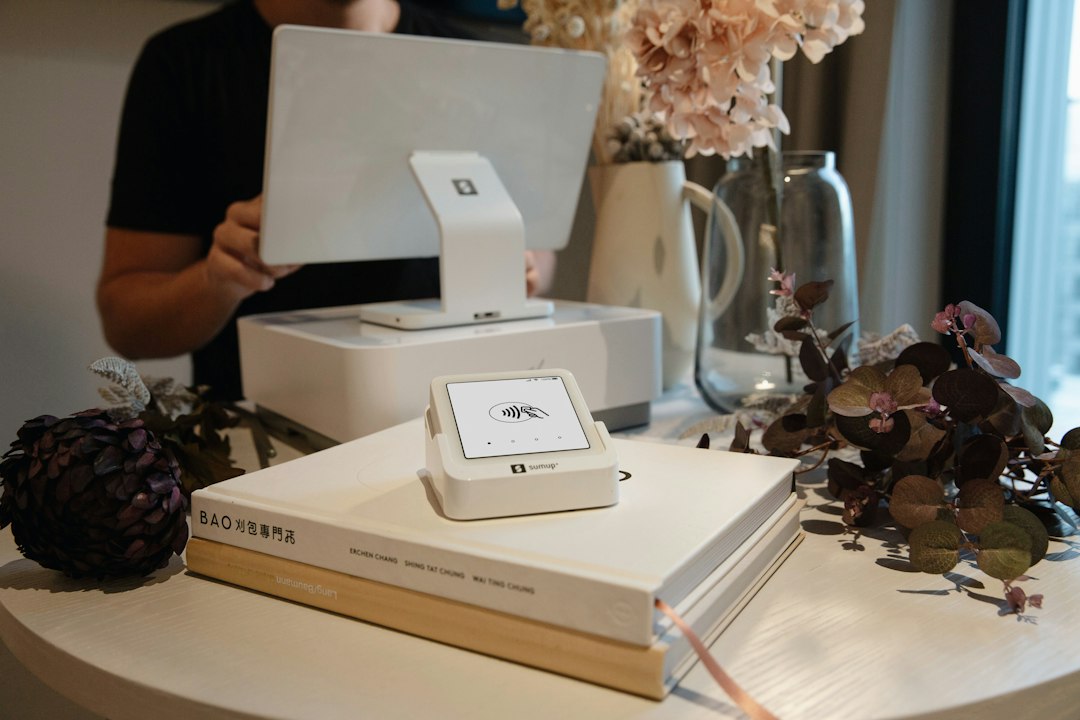
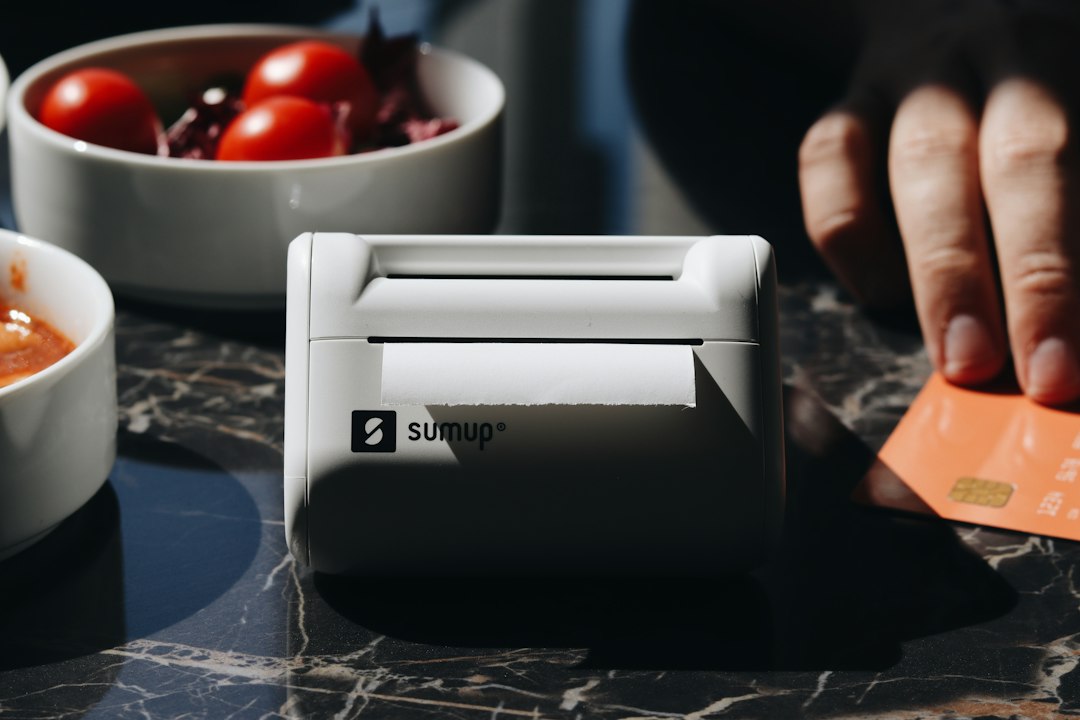
Square and SumUp. Widely used in small studios because they don't require a monthly fee and sign-up is quick, with a cheap physical card reader for taking payments on the spot. For remote deposits, however, they depend on a payment link or an invoice sent by email, with fees similar to Stripe's (around 1.75-2.5% per transaction). They are a solid alternative if you already take card payments for tattoos at the studio and want to unify in-person and remote payment systems.
Payment link integrated into booking software. This is the option with the least friction for both sides: the client pays without leaving the conversation, and it is automatically recorded which appointment has a deposit paid. The cost depends on the gateway the software uses behind the scenes, but the advantage isn't only financial: you don't have to cross-check Excel sheets against bank statements.
What you should really look at in online payment fees
Don't just look at the advertised percentage. Three things change the real calculation:
- Fee on the total amount or only on the deposit. If you collect a 50 euro deposit for a 400 euro tattoo, some gateways charge a fee only on those 50 euros; others, if you process the full payment later, also charge for that second transaction.
- Fixed monthly fee. A POS with a fee of 15-20 euros a month only pays off if you handle enough volume. With four or five deposits a week, a payment link with no fixed fee can work out cheaper, even if the per-transaction percentage is somewhat higher.
- Time until the money is available. Some gateways hold the payment for 2-3 days before transferring it. If you need quick liquidity for supplies or studio rent, that is also a cost, even if it doesn't appear in any brochure.
Do the math with your own numbers: if you collect an average of 15 deposits a month of 50 euros each, a fee of 2.9% + 0.30 euros costs you about 26 euros a month. If that process saves you half an hour a day chasing proofs of payment, it clearly pays for itself.
Deposits and the tax authorities: what you can't ignore
Here many tattoo artists go wrong out of ignorance, not bad faith: the deposit you collect is income and, as such, must be declared just like the rest of the service. It doesn't matter whether you receive it by Bizum, transfer or card; for the tax authorities it is revenue, and it must be reflected in your books at the moment you receive it, not when you finish the tattoo.
If you work as a self-employed professional, this means issuing the corresponding receipt or invoice for that amount, and declaring it in your quarterly VAT and income tax returns even if the tattoo itself is done weeks later. It is common to find studios that collect deposits via Bizum to a personal account and don't include them in their actual billing, something that can create a serious mismatch in an inspection, especially if the volume of deposits is high. It's advisable to consult your accountant on how to integrate these payments into your specific tax regime, because it varies depending on whether you invoice as a self-employed person, under the modules system or through a company.
This also connects with how you structure your prices: if your deposit policy isn't clear, neither will your accounting be, and that's where problems pile up.
What to do if your clients prefer Bizum or cash
Not everyone will pay by card, and that's fine. You can keep Bizum as an alternative for those who explicitly ask for it, but set a clear rule: the appointment isn't blocked in the calendar until the payment arrives, and give the client a short window (2-3 hours, not "whenever you can"). If it doesn't arrive within that window, the slot becomes free again.
What you can't afford is having five payment methods running in parallel with no central record, because that's where deposits get lost, appointments get duplicated, or you simply forget to collect. Even if you accept several methods, you need a single place where the status of each one is recorded.
The summary that saves you the calculation
If you collect few deposits a month and for low amounts, Bizum with manual follow-up may be enough for you. If you already take card payments at the studio, Square or SumUp can cover you remotely too without much hassle. As soon as your calendar grows, you work with several artists, or you raise the amount of your deposits, a payment link integrated into your booking system usually saves more in admin time than it costs in fees.
It's not a question of which gateway is "the best" in the abstract, but of which system gives you an at-a-glance view of the real state of your calendar and, along the way, makes it easier to keep your accounting up to date with no surprises.
Author's note: how we solve it at Teser
This is exactly what led us to integrate deposit payment into the booking flow itself in Teser: when a client books online, the payment is included in the same process, the appointment isn't confirmed until it is registered, and it is marked automatically without you having to cross-check data by hand or worry about whether that deposit is properly reflected in your invoicing. It's not the only way to solve it —Square, SumUp or a well-configured POS also work—, but it's the case we know best because we built it with this specific problem in mind. If you want to see it working with your own calendar, you can try Teser for free before deciding anything.
Cover photo by Jose Manuel Esp on Unsplash.