Studio and team · 8 min read
Commission, booth rental or hybrid: which model really suits you
September 12, 2026 · Equipo Teser

You've been mulling it over for months: do you charge your artists a percentage, rent them the booth, or mix both? The question seems technical, but it actually decides who bears the risk of a bad month, who benefits from a good month, and what kind of artists you'll attract and retain. There is no "correct" model: there are models that fit your current tattoo studio and others that will blow up in your face a year from now.
Let's go through all three, with real numbers, not generalities.
Percentage: you get paid when they get paid
It's the most widespread model in Spain, especially in studios that are just starting out or that work with junior artists. The logic is simple: the studio takes between 30% and 50% of each tattoo, and the artist keeps the rest. No work, no pay for anyone.
Real example: an artist bills €3,000 in a slow month. With 40% going to the studio, you earn €1,200. If that same artist has a good month and bills €6,000, you earn €2,400. You share the risk of the low streaks, but you also share the upside.
The problem appears with established artists. One who bills €8,000 a month knows perfectly well that they're paying €3,200 in commission, and at some point they work out how much a fixed rent of €600-700 would cost them. That's where the uncomfortable negotiations begin, or the departures to another studio with better terms for them.
The percentage model also forces you to keep thorough track of billing per artist, deposits, tips and refunds. If you don't have a clear system to record who collected what and when, you end up arguing over figures at the end of the month with people who have no reason to trust your memory.
Fixed rent: predictability in exchange for giving up the upside
Here the artist pays you a fixed amount, say €500 a month per booth, and keeps 100% of what they bill. You know exactly how much you'll earn from that booth each month, whatever forecast you make.
This works very well with established artists who already have their own clientele and bill steadily above €4,000-5,000 a month. For them, paying a fixed €500-700 is much cheaper than a 35-40% commission, and they know it. If you don't offer them this option, another studio will.
The risk is yours: if the artist has a bad month, a health problem, a long vacation or simply decides to slow down, you still need to bring in that fixed amount or cover the gap. And if the booth sits empty for two months while you look for a replacement, that €500-700 disappears from your account with nothing to offset it.
The relationship changes too: an artist who pays fixed rent is, in effect, a tenant, not a collaborator you supervise closely. They can turn down clients they aren't interested in, set their own hours within what was agreed and decide their schedule without you having much room to ask for explanations. If your studio depends on a unified brand image, this can clash.
The hybrid model: the one gaining the most ground in 2026
More and more studios in Spain are moving to a hybrid: a reduced fixed rent (€200-350) plus a low percentage (10-15%) of what the artist bills. The idea is to split the risk between both parties without either one carrying all of it.
Example with numbers: fixed rent of €300 + 12% commission. An artist who bills €4,000 in the month brings you €300 + €480 = €780. If they bill €7,000, they bring you €300 + €840 = €1,140. Compared with a pure 35% percentage, this artist would pay €2,450 in the second case, so the hybrid clearly works out better for them, and it still works for you too because you have a guaranteed floor.
This model tends to work best with mid-to-high-level artists, those who would no longer accept a pure 35-40% but also don't have enough clientele to take on a high fixed rent with no commission. It's the middle ground that avoids both the loss of established talent and the full risk of an empty booth.
The downside: it's more complex to explain and to manage. You need to put in writing what counts as gross billing, whether deposits count, what happens with refunds and free touch-ups, and have a reliable record-keeping system so you don't end up arguing over the calculation every month.
Which model each artist profile chooses
There's no single model for the whole studio, and in fact mixing models depending on the artist is common and reasonable, though awkward to explain if you don't make it clear from the start.
A junior artist without their own clientele usually prefers the percentage: they risk nothing if the month is slow, and the studio brings them part of their work through social media or referrals. Here a 40-50% commission is usually fair because the studio is investing in making them visible.
An established artist with their own waiting list will prefer fixed or hybrid rent, because every euro of commission they pay above what a fixed rent would cost them is money they're giving away. If you have someone consistently billing €6,000-8,000 and you keep charging them a pure 35%, it's only a matter of time before another studio with better terms takes them.
The common mistake is applying the same model to everyone for administrative convenience. It's easier to manage, yes, but it's also the reason many studios lose their best artist just as they start to become profitable.
What nobody tells you: the cost of switching models
Switching models midway with an artist who has already been with you for a year almost always creates friction. If you move from percentage to fixed rent, the artist may feel you're shifting onto them a risk you used to bear. If you move from fixed rent to hybrid, they may feel you're "meddling" with their billing.
The way to do it without breaking the relationship is to announce it in advance, at least a month, explain the numbers with concrete examples like the ones above, and offer the change as an option from a given date, not as a retroactive imposition. If the artist sees that they come out ahead or at least break even with the new model, they'll accept it without drama. If they come out behind, they'll look for another studio, and it's better to know that before wasting time.
Settle the model in writing, not verbally
Whichever model you choose, the real problem is usually not the percentage or the rent figure, but not having it in writing and well defined: what counts as billing, how deposits are handled, what happens with free touch-ups, when the agreement is reviewed. A clear collaboration contract avoids 90% of end-of-month arguments.
If you also track billing per artist manually, in spreadsheets or notebooks, you'll have discrepancies sooner or later. Tools like Teser let you record each payment linked to the artist who generated it and get the month's calculation without arguing over figures: it complements the decision about the model, it doesn't replace it.
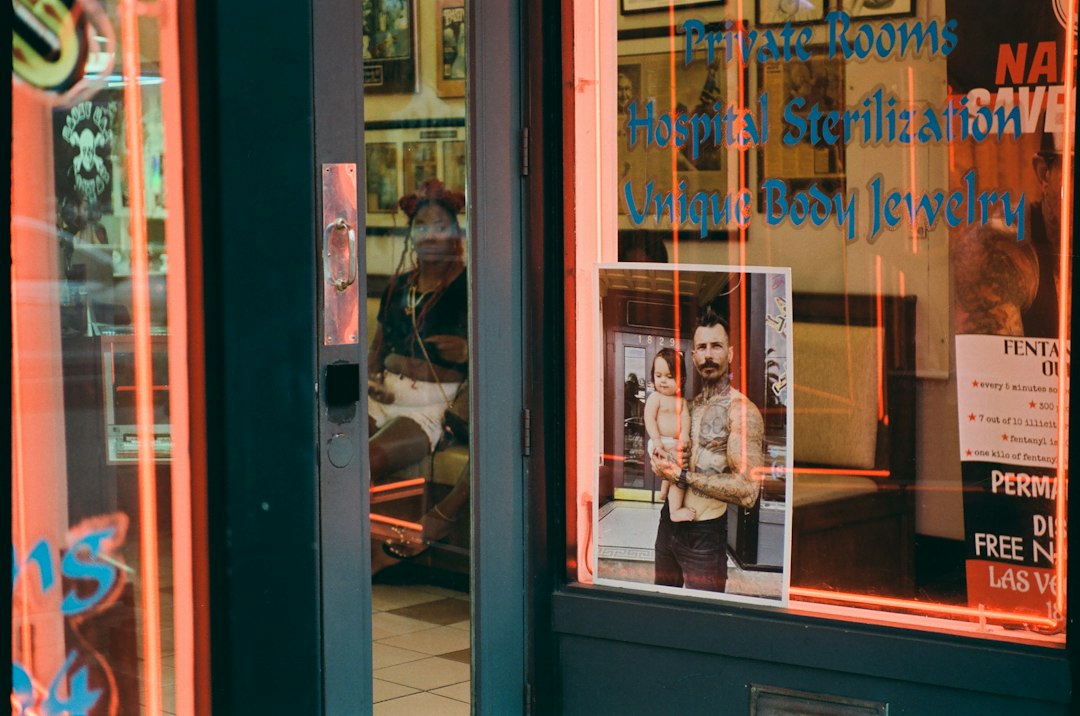
Cover photo by Dmitry Kropachev on Unsplash.