WhatsApp and customer service · 7 min read
The real cost of repeating the same quote over WhatsApp
October 25, 2026 · Equipo Teser

It's nine at night, you've just closed out the last appointment of the day, and you have fourteen unread messages. Twelve of them start the same way: "Hi, I wanted to ask the price of a small tattoo on the forearm". You write the same reply, with small variations, for the fifteenth time this week. If that sounds familiar, it's no coincidence: it's the most repeated and least questioned pattern in the trade. And it has a cost that almost nobody stops to calculate. Tools like Teser are designed precisely for this friction point.
How much time it really steals from you
Do the math with your own numbers, not mine. A hand-written quote—reading the message, looking at references if there are any, thinking about size and placement, writing the reply, sometimes repeating yourself because it wasn't clear—takes you between 4 and 8 minutes on average. If you get 15 price inquiries a week, that's between 60 and 120 minutes. Per month, between 4 and 8 hours. Per year, you could be talking about more than 80 hours spent solely explaining the same thing over and over.
Eighty hours are two full working weeks. Two weeks you could have spent tattooing, resting or creating new designs. And that's without counting the opportunity cost: while you're writing the twelfth quote of the day, client number three—the one who was really going to book—is waiting for a reply and looking at another studio's profile.
The trap is that each message on its own seems harmless. Five minutes is nothing. The problem is the constant repetition, with no system, no template, no filter. It's invisible work that doesn't bill and that, on top of that, gets done worse the more tired you are: at ten at night you don't explain things as clearly as you do at eleven in the morning.
Why always replying from scratch makes you look less professional, not more
There's a widespread idea in the trade: automating quotes sounds cold, as if you've stopped caring for the client. It's the opposite. When you reply tired, in pieces, at different times of the day, with information you sometimes forget to mention (minimum price, body area, whether VAT is included, whether a deposit is needed), the client receives an inconsistent message. One day you give one figure, another day a different range because you don't remember what you told the previous person. That does undermine your professionalism.
A well-structured quote that always includes the same points—approximate size, placement, style, color or fine line, price range, what the deposit covers—shows that you have your business under control. It's not less personal for being organized: it's more reliable.
What is really worth automating (and what isn't)
The goal isn't to put in a bot that answers anything. It's to automate the part that is always the same and save your time for the part that does require your judgment.
What can be automated: the first reply to "How much does it cost?", which almost never can be answered without more details. Instead of writing "it depends on size and placement, send me a reference photo and approximate measurements" every time, that message can go out on its own, in seconds, in the same tone you'd use yourself.
What can't be automated: the final quote once you have the photo, the size and the conversation. That still needs your eye. But if the first filter is already done—and the client has already sent the necessary info—that second step takes you half the time, because you're not starting from zero.
The middle ground, where the most time is saved, is the price ranges by type of work that you've already decided on but write from memory every time: small fine line, from X to Y; medium black-and-white piece, from X to Y; large color session, per hour. If those ranges are saved and sent with a click, you stop rebuilding the reply every time.
How Teser solves it without sounding like an answering machine
In Teser you can create quick replies and quote templates linked to your price list, which are sent from WhatsApp Business in your own tone, not as a generic company message. The difference compared to copying and pasting from your phone's notes is that the template pulls directly from your up-to-date rates: if you raise your hourly rate, it updates in all the automatic replies without you having to rewrite anything.
You can also set up an automatic first message that asks for a photo, placement and size before you step in, so that when you open the conversation you already have everything you need to give a real quote in a single message, not in five back-and-forths. That turns a 15-minute conversation into a 3-minute one, without losing an ounce of personal touch, because the client is still talking to you, not to a chatbot that doesn't understand what they're asking for.
You can also keep a history of the quotes given to each client, so if someone comes back months later asking "How much did you say it would cost?", you don't have to dig through a thousand conversations: everything is recorded and linked to their profile.
The effect you don't see in the short term: fewer inquiries that go nowhere
There's a side benefit that is rarely mentioned: when your quotes are fast, clear and always consistent, you also filter better the people who are just comparing prices with no real intention of getting tattooed. If you take three days to reply because you're swamped with repeated messages, you lose both the serious client and the curious one. If you reply within minutes with clear information, the serious client books sooner and the curious one rules themselves out, without you having invested eight minutes of your time explaining the same thing you told the other fourteen.
This has a direct effect on your schedule: fewer dead gaps waiting for replies, fewer clients who cool off because you took too long to answer, and more hours of your week spent tattooing instead of writing the same paragraph.
Start by measuring, not by automating blindly
Before setting up any template, look at your WhatsApp from the last week and count how many messages start by asking the price with no further details. That number, multiplied by the minutes it takes you to reply to each one, is your real starting point. From there, decide which part of that conversation can be left on autopilot without losing the personal touch that brought you this far.
If you want to see how it looks set up on your own WhatsApp Business, you can try Teser for free and configure your quote templates in an afternoon, with no commitment and without having to change the way you talk to your clients.
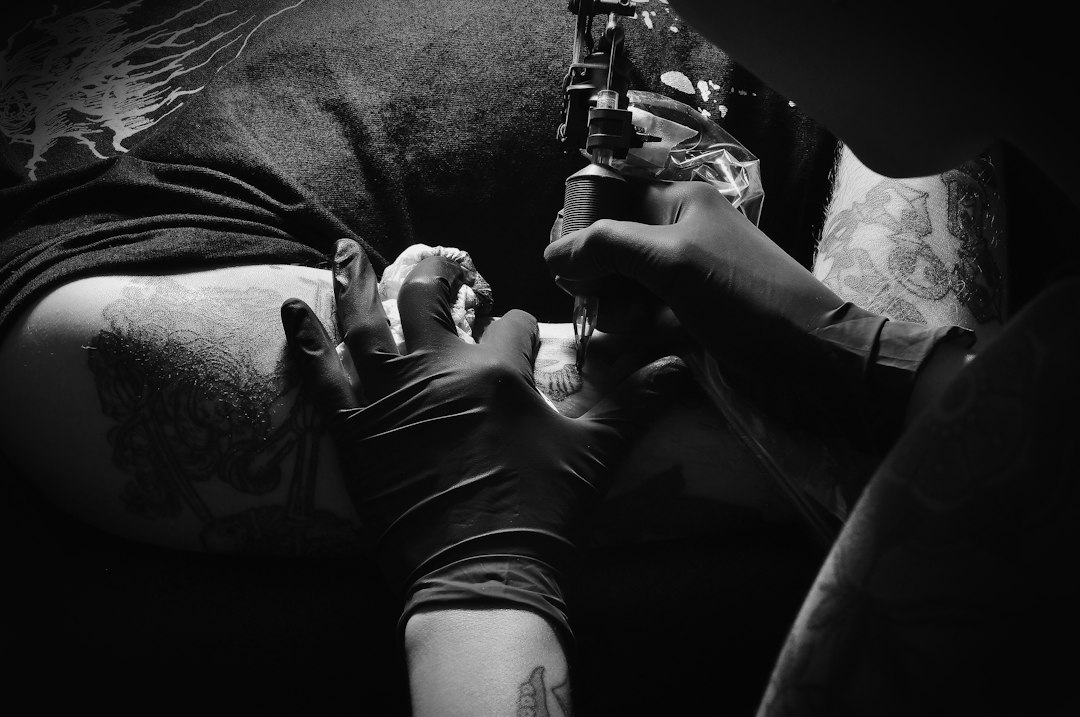
Cover photo by Bradley Andrews on Unsplash.