Attracting and retaining clients · 7 min read
Instagram for tattoo artists: what to post and how much time to spend on it
November 8, 2026 · Equipo Teser
If you run a tattoo studio and tattoo five or six hours a day, Instagram is not your main job. It's a tool that, if poorly managed, eats two hours of your sleep at night while you upload photos nobody sees. And it can be poorly managed the other way too: studios that haven't posted anything in three months and then wonder why the calendar is empty during the first two weeks of the month.
The question isn't "should I be on Instagram?". You already know the answer, of course you should: it's your shop window, your portfolio, and the way someone who doesn't know you can come to trust you to put a needle in their skin. The real question is how much time you spend on it and what you post so that time isn't just thrown into a black hole.
How much time you can realistically afford to spend
A tattoo artist who works 25-30 hours a week with clients has no room to produce content as if it were their only occupation. The realistic figure for a small studio (one to three artists) is between 3 and 5 hours a week, split like this:
- 1 hour capturing material during sessions (photos of the process, the final healed result, a short video of the machine at work).
- 1.5-2 hours of editing and assembly (trimming video, adding text, selecting photos).
- 1-1.5 hours of posting and replying to comments/DMs.
If it's taking you more than 5 hours a week, something is set up wrong: either you're editing 60-second videos as if they were short films, or you're trying to be on every format at once without being clear about which one works for you.
One thing worth keeping in mind: content doesn't replace word of mouth or reviews, but it does reduce the time you spend explaining your work over WhatsApp. A well-organized portfolio on your profile filters out inquiries before they reach the chat.
The formats that really bring bookings
Not all formats carry the same weight. Based on the experience of studios that track their conversions, this is the order of return per hour invested:
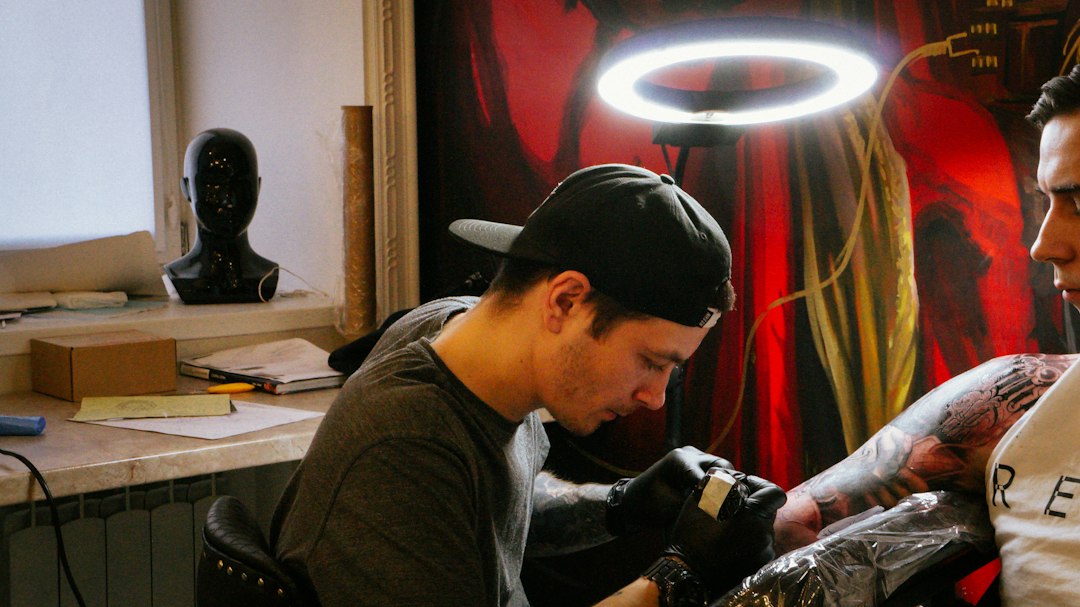
Process reels (15-30 seconds). The content that works best isn't the final result, it's the process: the needle going in, the sketch taking shape, the before/after in the same frame. A well-made 20-second reel can generate more reach than ten standalone photos. You don't need complex editing: a fixed camera, good light, and cutting out the boring parts.
Healing carousel (3-5 photos). A photo right after the tattoo, a photo a week later, a photo at 20-30 days. This sells two things at once: your work and your approach to aftercare. Many people decide to get tattooed by you after seeing how your work heals, not just how it looks on the first day.
Stories of your daily work. They need no script or editing. A photo of the design while you're preparing it, a question to your audience about styles, a "two slots left this week". They cost no time and keep your profile active between bigger posts.
Static photos of the final result. They still work, but on their own they no longer generate the reach they did a few years ago. Use them to round out your feed, not as the pillar of your strategy.
What almost never pays off for the time: long videos explaining your artistic philosophy, purely promotional posts ("discount this month") with no content in between, and reposts of generic industry memes that don't show your work.
Frequency: better consistent than intense
You don't need to post every day. You need to post predictably. Three feed posts a week (a reel, a carousel, a photo) plus daily process stories is a pace that a small studio can sustain without burning out, and one that the algorithm recognizes better than a week with five posts followed by three of silence.
If you have to choose between quality and frequency, choose quality without going overboard: a well-shot reel every three days performs better than a mediocre one every day. An account that posts erratically—ten posts in a busy week and none the next—conveys exactly what it is: a disorganized calendar.
What to post when you have no time or energy
There are weeks of large pieces, double shifts, and difficult clients. In those weeks you're not going to film anything elaborate. For those weeks, keep a reserve bank of content:
- Photos of older pieces you never uploaded (we all have that camera roll).
- A simple story asking which style your community would like to see more of.
- A repost of a Google review with a screenshot, saying thanks.
- A photo of the studio, your workstation, your supplies: it humanizes without demanding production.
The important thing is not to disappear for three weeks in a row. People who follow you and who someday decide to get a tattoo look at when your last activity was before writing to you. An inactive profile gives the impression that you have no work or that you've closed.
Measuring whether it's really bringing you clients
Don't just measure "likes". Measure this every month:
- How many bookings came in mentioning Instagram or a specific reel.
- How many inquiry DMs you received and how many turned into an appointment.
- Which type of content (process, healing, stories) brought in the most messages.
If you've been posting for three months and no appointment comes in mentioning your profile, the problem isn't frequency: it's the content or the audience you're reaching. Try changing the format before giving up or forcing more posts.
The real balance
For a self-employed tattoo artist, Instagram is not a full-time digital marketing strategy, it's a routine of capturing material built into your normal working day. Film while you tattoo, photograph the healed tattoos you already have booked as check-ups, and spend the rest of your time tattooing, which is what actually pays your rent.
If what's eating your time isn't Instagram but managing appointments, quotes repeated over WhatsApp, or booking deposits, there is room for improvement with management tools like Teser, which frees up time so you can create that content without taking it from your sleep.
Cover photo by Alexey Demidov on Unsplash.