Pricing and quotes · 8 min read
Tattoo Price Chart: By Size, Placement and Color
September 24, 2026 · Equipo Teser

Every time you quote a tattoo by eye, you are making a business decision without data. And when you have to delegate that decision to an apprentice, a fellow artist at your studio, or simply a web form, the problem multiplies: if there is no written criteria, each person charges differently for the same thing. This article is not about how to calculate a one-off quote —we've already covered that—, but about how to build the system behind it: a chart you can hand to someone else, or program into your software, that keeps giving the same result without you having to be there correcting every case. If you want to see how this is automated in practice, you can try Teser for free and build your own chart in an afternoon.
Why quoting by eye is costing you money
A tattoo artist with eight years of experience can work out a price in their head with fair accuracy. The problem isn't intuition, it's traceability. If you charge €180 for a piece and the following month €220 for another practically identical one, and a client mentions it to someone else, you have a trust problem that more experience won't fix.
Moreover, intuition can't be delegated. If you hire a second artist, or if you want the front desk or the website form itself to give a first estimate, you need something written down: concrete variables, concrete multipliers, not "it depends".
The real cost of not having one isn't just inconsistency between quotes. It's the time you lose explaining why you charge what you charge every time someone asks, and the session hours you give away because you misjudged the real size of the piece.
The three variables that really drive the price
Before building the chart, you have to accept that only three variables explain 90% of the price difference between two tattoos:
Size. Not in isolated centimeters, but in estimated needle time. A 10x10 cm tattoo in fine line doesn't take the same time as a 10x10 cm one with dense shading. That's why it's best to set a base price by size bracket (for example: up to 5 cm, 5-10 cm, 10-15 cm, 15-20 cm, and beyond that by fixed quote) rather than by exact square centimeter, which is an illusion of precision that doesn't hold up in the chair.
Body placement. Ribs, sternum, hands or feet aren't "a little more expensive": they mean slower sessions, more breaks, and a higher risk of having to redo work because the client moved. A surcharge of 15-25% over the base price for complex areas is reasonable and defensible. Forearm or leg, on the other hand, go at base price with no surcharge in most studios.
Color and technique. This is where the most money is lost. Color isn't "a nice extra", it's more machine time, more ink, and on large pieces, more sessions. A 20 cm color realism piece can take twice as many hours as a linework piece of the same size. Set a clear multiplier: for example, blackwork or linework = base price; black shading = base x1.2; simple color = base x1.4; color with gradients or realism = base x1.6-1.8. You adjust these numbers to your real pace, but you need numbers, not gut feelings.
How to build the chart step by step
Start with your own history. Take the last 20-30 tattoos you've done and note the actual size, placement, technique and hours it took you (not what you charged, what it took). That gives you your real cost per working hour, which is the foundation for everything else.
Define your effective hourly rate, with a margin. If you work at €70/hour and a medium piece with shading in a normal area takes you 3 hours, your base price is €210. On that number you apply the placement and color multipliers you've set.
Write the chart in three columns: size (brackets), placement (normal / complex), technique (linework / shading / color). The final price is the size base price × placement multiplier × technique multiplier. With that, anyone at your studio —or you yourself six months from now, with the details fresh— can reproduce the same quote without making anything up.
Leave a manual adjustment margin of ±10% for unusual cases (very sensitive skin, a design with a huge amount of detail in a small space, returning clients). But make it a justified exception, not the norm.
Delegate without losing control: what whoever quotes for you needs to know
If you have apprentices, fellow artists at your studio or someone who handles WhatsApp for you, the chart only works if it comes with three simple rules:
First, which size brackets exist and how to measure them on the skin, not on the design on paper (a 15 cm design on A4 doesn't measure 15 cm on the arm).
Second, which areas are marked as "complex" and carry a surcharge. It's best to have a closed list here: ribs, sternum, hands, feet, neck, head. Everything else is a normal area unless you say otherwise.
Third, which questions to always ask before giving a number: approximate size, exact placement, whether it includes color or not, and whether it's a cover-up of a previous tattoo (the latter almost always adds time and deserves its own surcharge, between 20 and 30% extra, because you have to work over existing ink).
With these three rules written down, anyone can give a correct ballpark quote in the first reply, without having to consult you every time or improvise a number that you then have to correct in front of the client.
Automate the chart instead of repeating it by hand
This is where the paper chart falls short. You can have it perfectly defined and still lose half an hour a day typing the same calculation in WhatsApp. In Teser you can load your price chart as system rules: size brackets, placement surcharges, multipliers by technique and by cover-up. When someone fills in the contact form or your team enters the client's details, the quote is generated automatically, with the same criteria every time, and saved alongside the client's record for the in-person consultation session.
This doesn't replace the final in-person assessment —the final tattoo always needs to be seen on the skin—, but it does filter out, from the very first message, anyone looking for a price you'd never work for, and it gives your team a defensible number without having to interrupt you fifteen times a day. The practical result: fewer WhatsApp conversations to reach the same quote, and no client comparing different figures from two people at your own studio.
A chart you don't touch every month
A well-built price chart doesn't need constant revision. You adjust it twice a year at most: when your material or rent costs go up, or when you decide to raise your hourly rate because your demand allows it. Other than that, the less you touch it, the more trust it builds, both with your team and with your returning clients who compare prices from one session to the next.
If you still calculate every quote from scratch, the first step isn't learning more formulas, it's writing down the ones you already use and turning them into a fixed rule. And if you want that rule to apply itself, without you having to keep an eye on every message, you can try Teser for free and see how your own price chart becomes an automatic quote from the first contact.
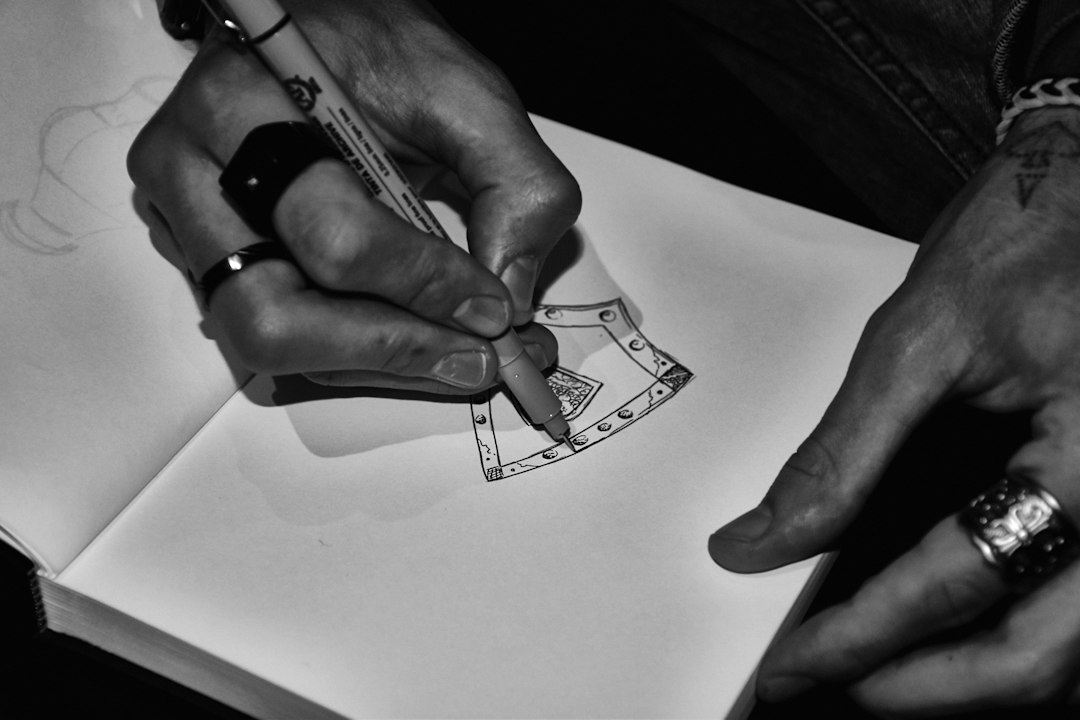
Cover photo by HIVAN ARVIZU @soyhivan on Unsplash.